
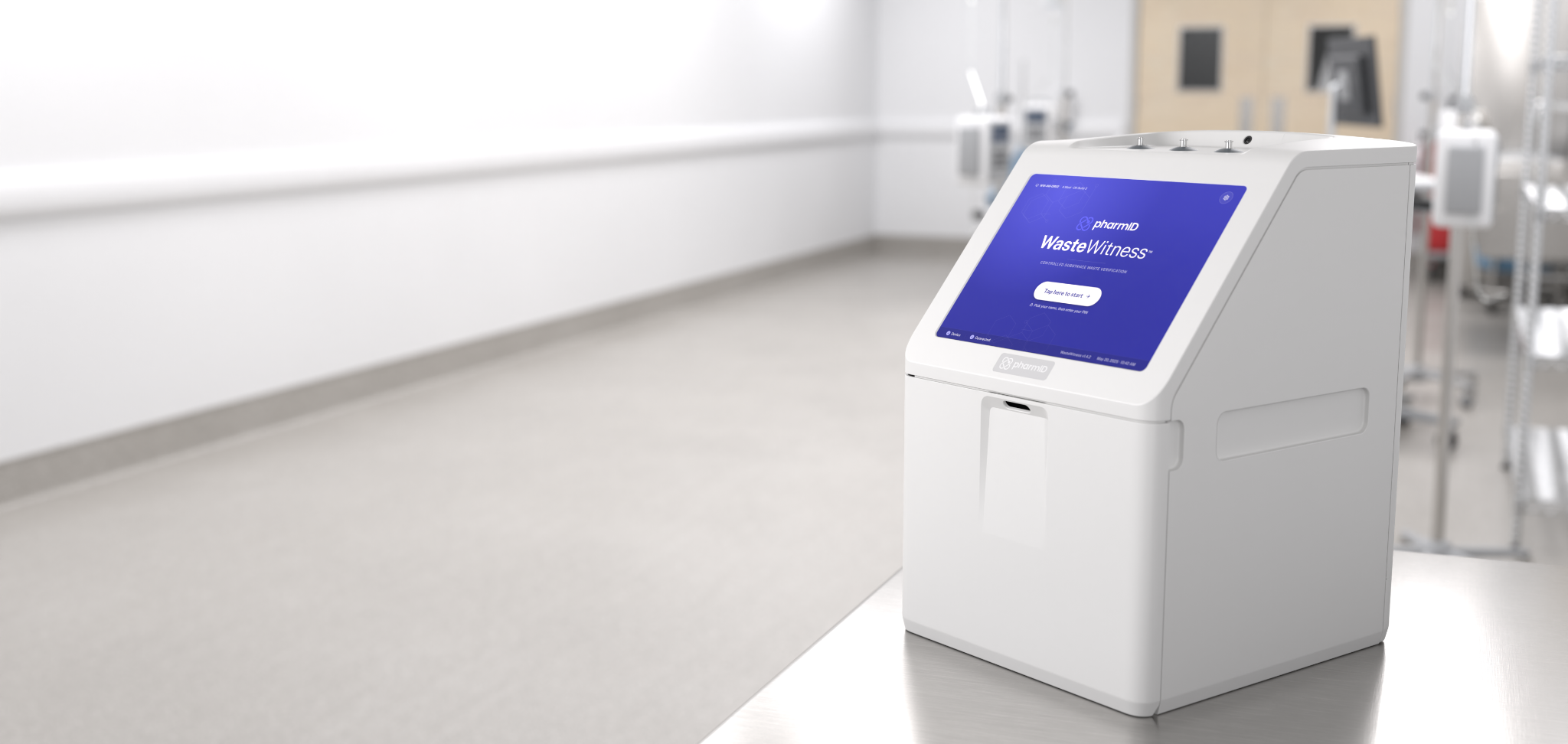
Chemical evidence. Clearer next steps.
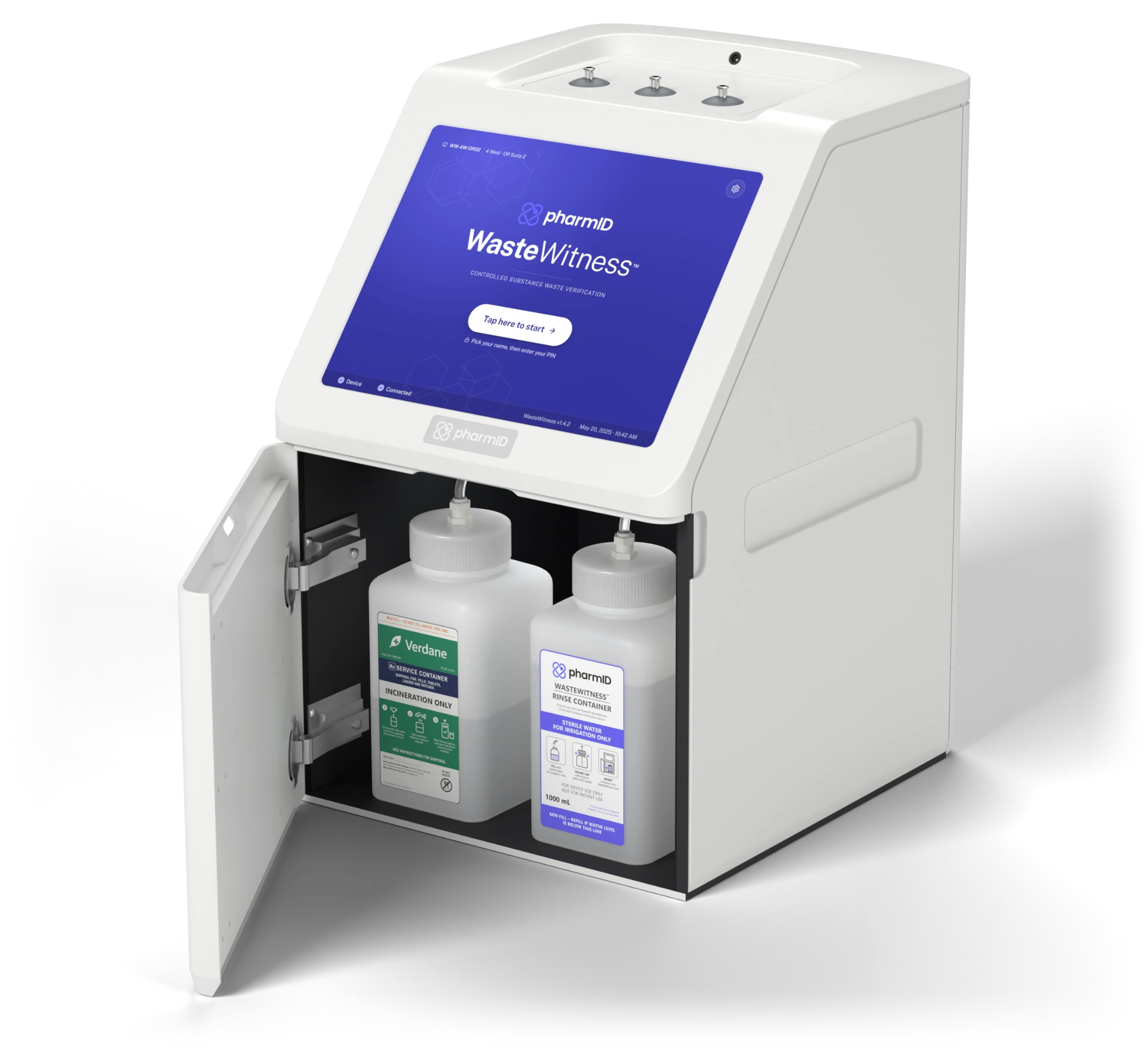
WasteWitness combines the device, MED-ID analysis, and a dashboard for authorized administrators. It helps pharmacy, diversion, and compliance teams connect what was wasted with the activity recorded around it.
Verify what was wasted.
Raman spectroscopy and MED-ID assess drug identity and concentration. Separately measured volume adds another check against the expected waste.
Keep clinical teams moving.
Three waste ports support a practical workflow. Wasting typically takes less than 60 seconds per drug, with no waiting at the device for analysis.
Understand activity over time.
WasteScore looks for patterns in drug identity, concentration, volume, and workflow. It automatically creates Cases and adds clinicians to the Watchlist as activity warrants review.
Start where it fits.
Begin with collected waste testing, mobile audits, or targeted investigations in pharmacy. Add point-of-care verification in clinical areas as your program grows.
Designed for the pace of patient care
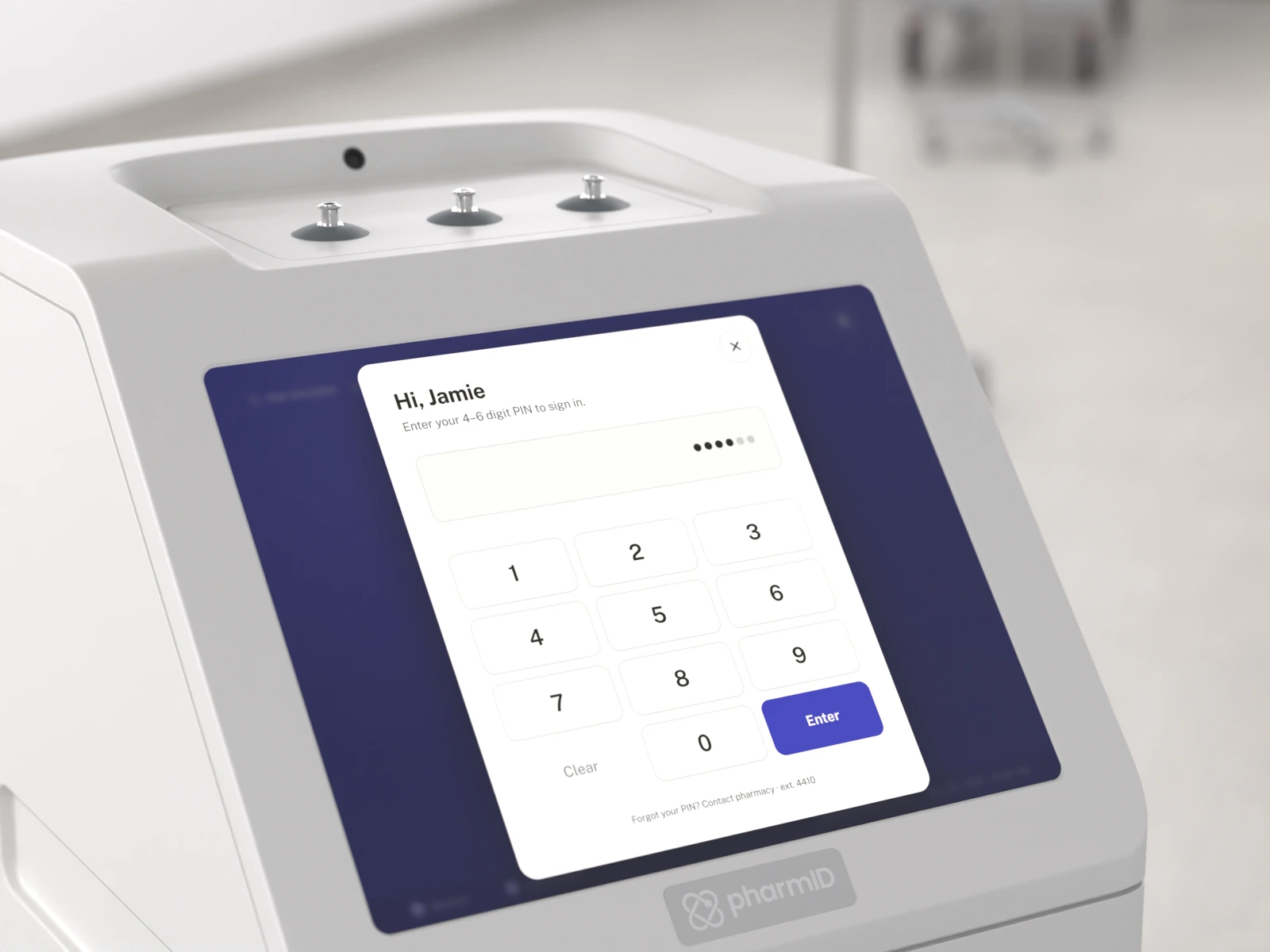
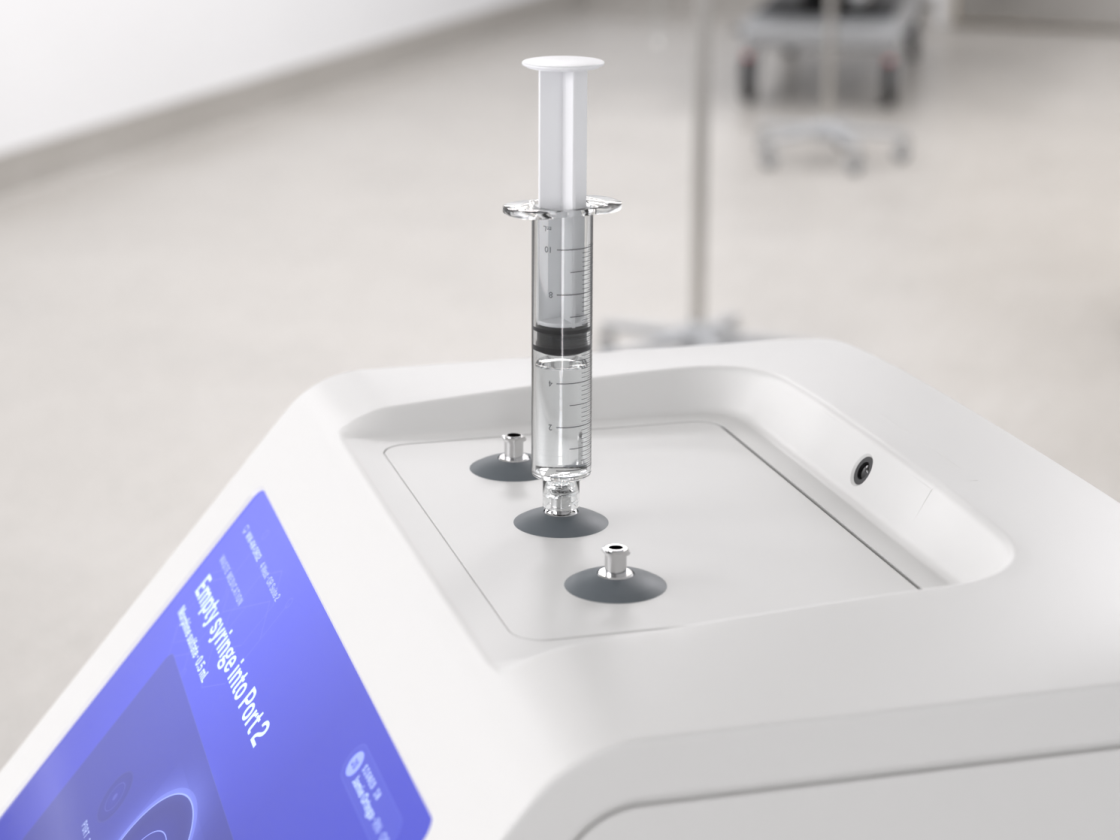
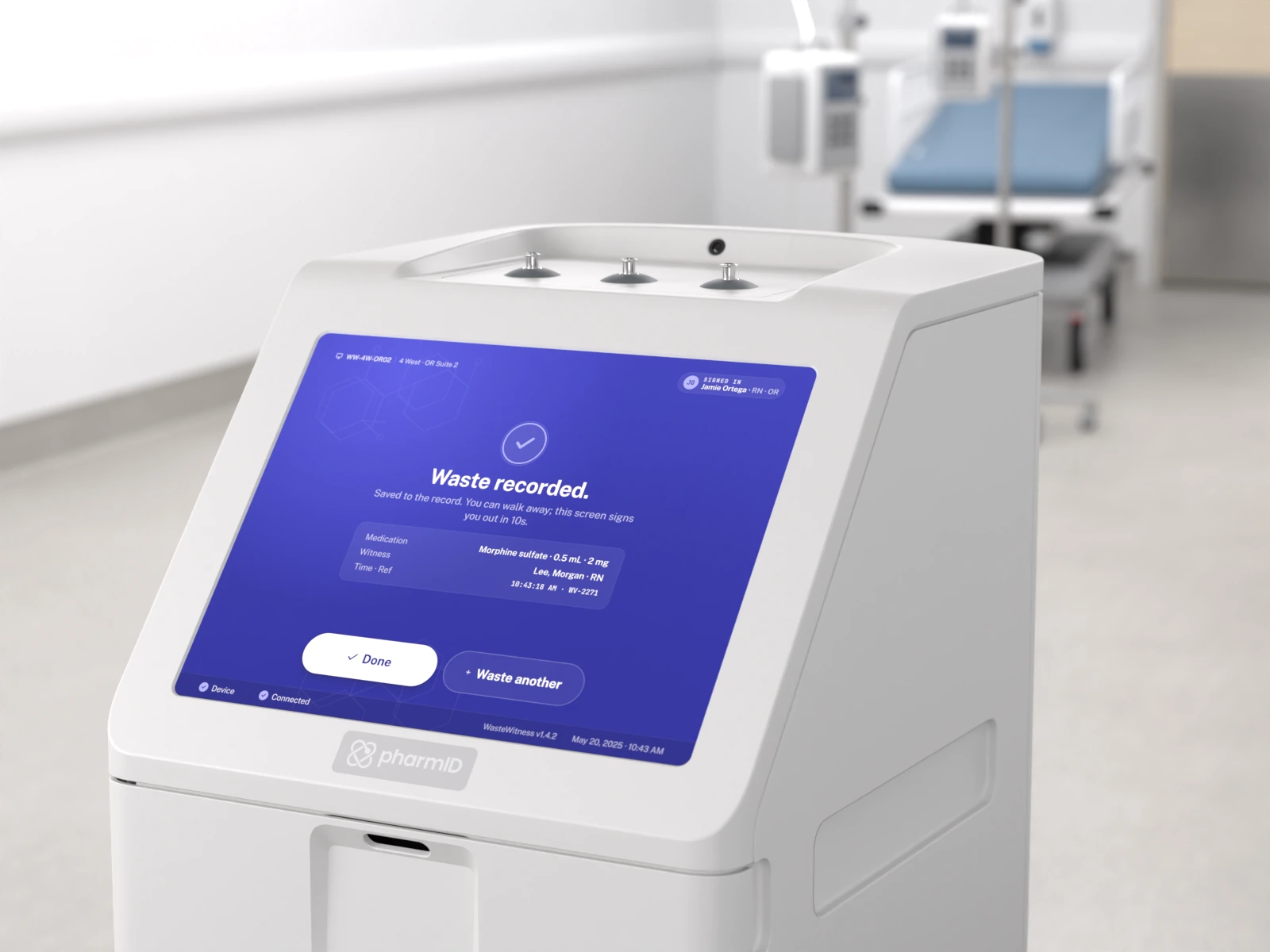
Clinicians receive confirmation at the device and do not wait for analysis. Authorized administrators review the findings and available event details in the dashboard.
Review the result and the surrounding activity
Each waste event brings together verification findings and available context such as clinician, witness, time, and location. WasteScore helps teams recognize patterns that may indicate substitution, dilution, skimming, or workflow concerns such as witness overrides.
Automatic Cases and Watchlist placement bring related activity into focus. Your team reviews the chemical findings with medication records and clinical context to decide what follow-up is needed. Explore results and waste activity trends.
Product specifications
- Dimensions
- 13 in D × 12 in W × 17.5 in H
- Display and weight
- 12.1 in touchscreen; 35 lb empty
- Waste inputs
- Three luer-lock waste ports; luer-lock tip syringe
- Sample volume
- 0.5 mL minimum; confirm formulation requirements
- Analysis
- Typically 30 - 60 seconds per drug; administrators review results
- Power
- 100 - 240 VAC, 50 - 60 Hz
- Connectivity
- Ethernet (RJ-45) and wireless networking
- Sign-in
- Name and PIN; Active Directory or Microsoft Entra ID (formerly Azure AD)
- Optional sign-in
- Badge and fingerprint, depending on hospital systems and hardware
- Integrated features
- Camera, barcode scanner, automatic rinse, and secure waste container
- Software
- WasteWitness app and dashboard, MED-ID, WasteScore, and cloud data storage
- Service and support
- Included in the monthly subscription
Confirm sample requirements, container compatibility, cart configuration, and IT requirements with PharmID when planning your deployment.
Ready for the daily workflow
Included: WasteWitness device, waste container, rinse container, and power cable.
Staff replenish distilled water and replace the waste container. Automatic rinsing keeps the testing pathway ready between waste events.
A mobile cart is an optional deployment choice. Discuss cart size, power, and battery requirements for your intended workflow.
Does it cover your medications?
Supported medications include fentanyl, hydromorphone, ketamine, midazolam, and morphine. Coverage depends on the medication, concentration, and formulation.
See supported drugs and concentrations. Contact us to discuss an unlisted formulation or your evaluation requirements.